5 things nobody tells you about Hermes Agent OS
One of the biggest open-source AI projects in the world, and the thing most people are searching for isn’t quite the thing that exists.
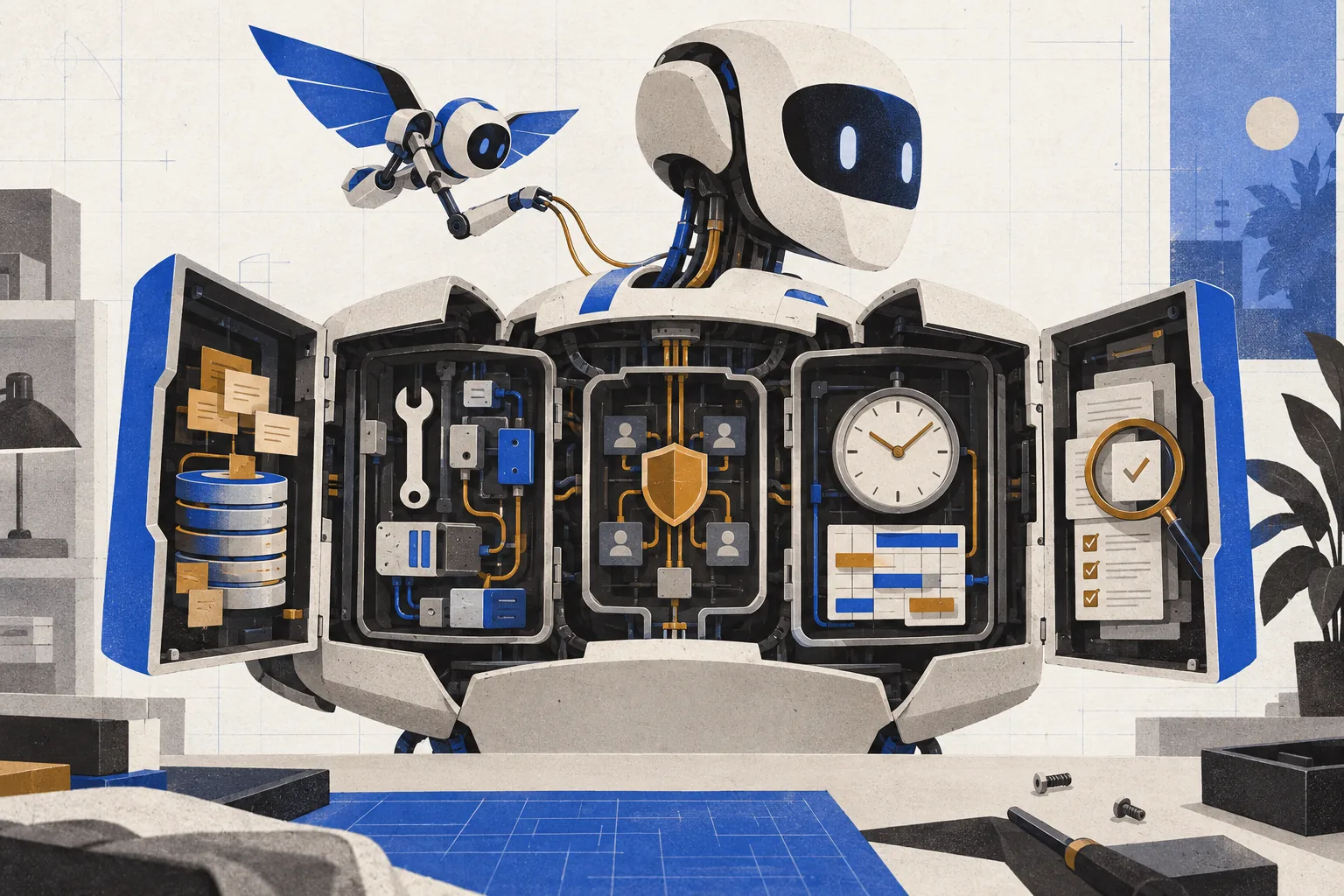
Hermes Agent is one of the largest open-source AI projects in existence. As of today it has 226,505 stars and 44,165 forks on GitHub, roughly 2,580 contributors, an MIT licence, and a commit pushed this morning. It is built by Nous Research, it is free, and installing it takes one command.
Search “Hermes Agent OS”, though, and you mostly land somewhere else: a run of near-identical guides explaining how to assemble a “mission control dashboard” in an hour, each funnelling toward a paid community membership. The software underneath those guides is the free one. The distinction is worth understanding before you pay for anything.
Here are five things the guides tend not to lead with, each checked against the repository and the official documentation rather than the blogs.
Five things worth knowing
“Agent OS” is not a Nous Research product
Nous ships Hermes Agent. Searching their GitHub organisation for anything called “Agent OS” returns zero repositories. What the guides call an OS is a community assembly, the real agent, plus an Obsidian vault for memory, a free model through OpenRouter, and a dashboard, presented as a system you build yourself. That is a legitimate thing to do, and none of it makes the underlying agent less real. It just isn’t an official product, and the software it is built from costs nothing.
It is enormously popular and still pre-1.0
The current release is v0.20.0, the twenty-fourth release, tagged by date and shipping at roughly weekly cadence. There are 28,947 open issues. Both facts are true at once: adoption far ahead of most funded startups, and software still moving fast enough that this month’s guide may not match next month’s build. Treat any step-by-step tutorial as perishable.
The learning loop is the actual differentiator
Most agents forget you. Hermes writes its own skills after complex tasks, improves them while using them, searches its own past conversations with full-text search plus model summarisation, and builds a persistent picture of the user across sessions via Honcho dialectic modelling. It follows the open agentskills.io standard, and there is a separate Nous repo applying DSPy and GEPA to evolve those skills further.
It is not a laptop app
Hermes runs across seven terminal backends, local, Docker, SSH, Singularity, Modal, Daytona and Vercel Sandbox, with serverless options that hibernate when idle and cost almost nothing between sessions. It happily runs on a $5 VPS. Meanwhile you talk to it from Telegram, Discord, Slack, WhatsApp, Signal or the CLI through one gateway, with voice memos transcribed and conversations continuing across platforms.
There is no model lock-in, and NVIDIA has taken an interest
Point it at Nous Portal, OpenRouter, OpenAI or your own endpoint and switch with a single `hermes model` command, no code changes. On the hardware side, Nous has said publicly it worked with NVIDIA so Hermes runs well on the RTX/DGX Spark machines, and trade coverage in June 2026 described Hermes as the reference runtime for NVIDIA’s 550B-parameter Nemotron 3 Ultra. We could not confirm that last detail from an NVIDIA source directly, so treat it as reported rather than official.
The practical summary: you do not need to buy anything to run Hermes. The install is a single curl or PowerShell line from the official docs, the licence is MIT, and every capability above ships in the free repository. Paid communities can still be worth it for the hand-holding and the templates, just go in knowing you are paying for guidance, not for access.
The caution is the flip side of the feature list. An agent that writes its own skills, runs shell commands, schedules unattended jobs and reaches your messaging accounts is a large amount of trust to hand over, and 28,947 open issues is a reminder of how young this is. Start it somewhere disposable, give it the narrowest credentials that let it do the job, and watch what it does before you let it run unattended.
Questions people ask
- Is Hermes Agent OS free?
- The software is. Hermes Agent is released by Nous Research under the MIT licence and installs with a single command, and the components the guides assemble around it, an Obsidian vault, a free model via OpenRouter, cost nothing either. What is generally paid is the community membership offering the setup templates and walkthroughs.
- Who makes Hermes Agent?
- Nous Research. The repository is github.com/NousResearch/hermes-agent, with documentation at hermes-agent.nousresearch.com. No product called “Agent OS” exists in their GitHub organisation; that name comes from the community guides built on top of the agent.
- What makes Hermes different from other AI agents?
- A closed learning loop. It creates skills from experience and refines them in use, searches its own conversation history, and maintains a model of the user across sessions rather than starting cold each time. It also runs detached from your machine, on a cheap VPS or serverless sandbox, while you talk to it through ordinary messaging apps.
- Should I follow a paid course to set it up?
- Not necessarily. The official documentation covers installation and configuration, and the project ships an installer that handles dependencies on Linux, macOS, WSL2, native Windows and Termux. Given the roughly weekly release cadence, official docs are also likelier to be current than a third-party walkthrough.
Repository facts verified directly against the GitHub API on 6 August 2026: 226,505 stars, 44,165 forks, MIT licence, Python, created 22 July 2025, 28,947 open issues, 24 releases with v0.20.0 (tag 2026.8.3) current, and approximately 2,580 contributors. Capability claims come from the project’s own README and documentation at hermes-agent.nousresearch.com. That no “Agent OS” product exists under Nous Research was checked by searching their GitHub organisation, which returns zero matching repositories. The characterisation of third-party guides is based on reading them; the NVIDIA Nemotron reference-runtime claim comes from trade coverage in June 2026 and is labelled above as reported because we could not confirm it from an NVIDIA source. Star counts and issue totals move daily.
Trying to work out which AI tools fit your task? Describe the outcome and get a Blueprint: the tools, the prompt, and the steps, with pricing we verified ourselves.