Claude is watermarking its words now. Here's what that actually detects, and what it can't
Anthropic is weaving an imperceptible, machine-readable mark into Claude's text and signing its images. We checked what the watermark proves, what strips it, and why the EU deadline made it happen now.
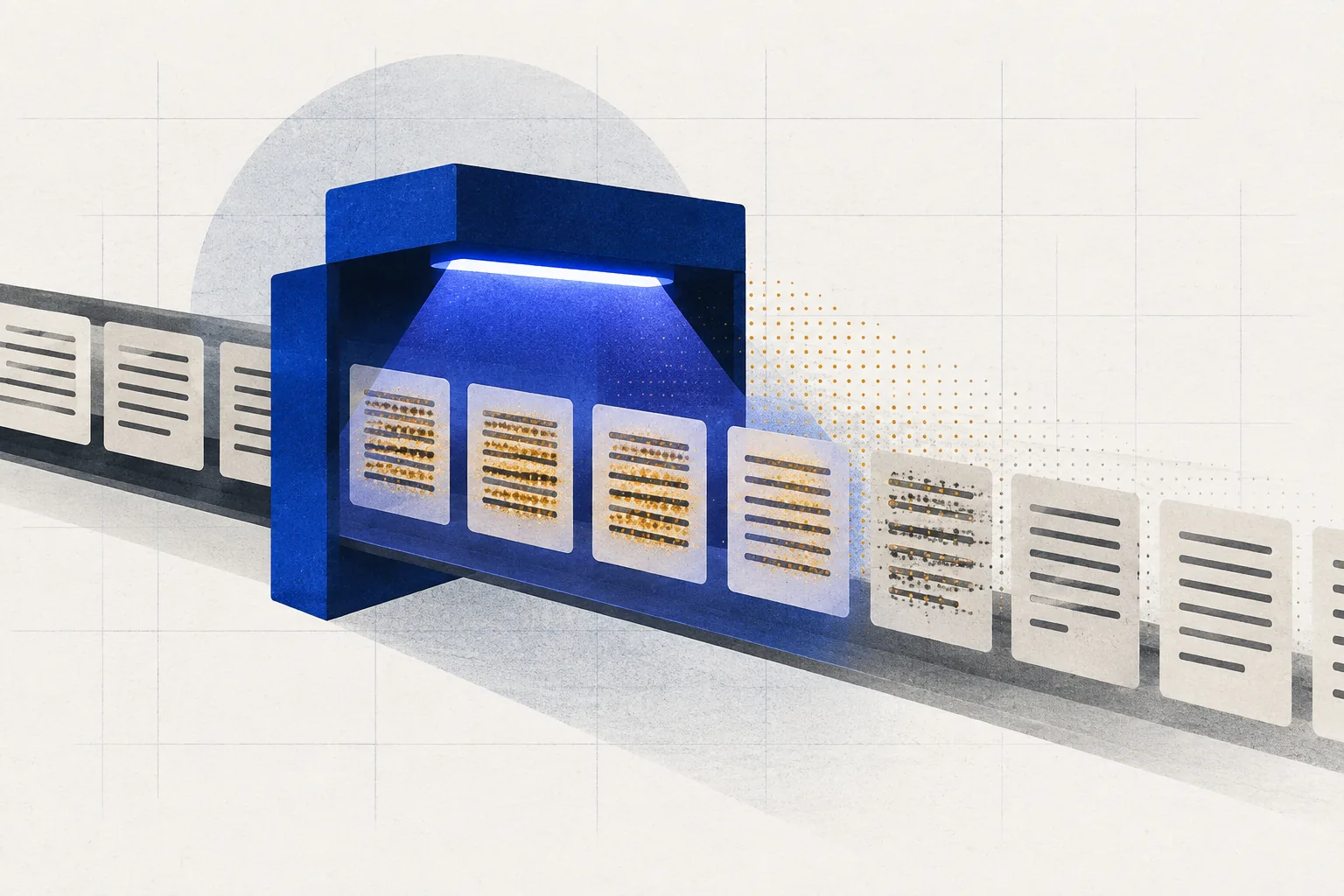
Anthropic has started marking Claude's output as AI-generated, and for text, the mark is invisible. Per the company's own documentation, supported Claude models now weave "an imperceptible watermark directly into the text itself", one that survives copy-paste and "may persist through some editing". Images and files get a different treatment: signed provenance metadata using the open C2PA standard.
The watermarking is applied at the model level, so it does not matter which door the text leaves through, the API, the Claude apps, Claude Code, or a cloud partner such as AWS, Google Cloud or Microsoft Foundry. And although the trigger is European law, Anthropic says the marks apply wherever Claude is offered, worldwide, rather than being switched on for EU users only.
The headline making the rounds is accurate, but the details carry two honest surprises: not all Claude text is marked yet, and a detected mark proves less than most people will assume. Both caveats come from Anthropic's own documentation, and they matter more than the headline. Here is what checks out.
The watermark, fact-checked claim by claim
1. Invisible text watermarking is real, and Anthropic's own words confirm it
Anthropic's help-center page states that when a supported model generates text, it embeds an imperceptible watermark in the text itself, without changing meaning, quality or readability. This is the class of technique Google DeepMind published in Nature in October 2024 as SynthID-Text: a statistical watermark applied during sampling, invisible to readers but detectable by software. Anthropic has not yet published its own technical details; it says detection documentation is forthcoming.
2. It does not cover all of Claude yet
Only Claude models launched on or after 2 August 2026 support marking at launch. Anthropic says it is "working to add marking support" to models launched before that date, which the law gives a transition period. Practical consequence today: plenty of Claude-generated text in circulation carries no mark at all, and will not until older models are retrofitted or retired.
3. A detected mark means "Claude was probably involved", nothing more
Anthropic is unusually direct about this: "Detecting a Claude mark tells you that the content may have been processed by Claude. It does not, on its own, confirm the full provenance of the content." A marked paragraph inside an article does not mean the whole article is synthetic, and it says nothing about who prompted it or why.
4. The absence of a mark proves even less
By Anthropic's own account, heavy editing, paraphrasing, translation and format conversion can strip the watermark, and unmarked output from older models is everywhere. The company states plainly that a missing mark "doesn't mean the content wasn't AI-generated or processed". Anyone determined to launder AI text still can; watermarks raise the effort, not a wall.
5. Images get C2PA metadata, not an invisible pixel mark
For generated files such as .svg, .png and .jpg, Claude attaches signed provenance metadata under the Coalition for Content Provenance and Authenticity (C2PA) standard, the same open standard used across the industry for content credentials. Metadata is robust to nothing that strips it deliberately, but it is verifiable and flags tampering when present.
6. The reason is a legal deadline, not a change of heart
Article 50(2) of the EU AI Act requires providers of generative AI to ensure outputs "are marked in a machine-readable format and detectable as artificially generated or manipulated", with the obligation applying from 2 August 2026. Anthropic has signed the EU's Code of Practice on this and chose to comply globally rather than fence off Europe. The law carves out exceptions, including assistive editing that does not substantially alter the input.
The sober reading: this is a meaningful transparency step whose main value is statistical, not forensic. At internet scale, watermarks make AI-generated text measurable, platforms and researchers can estimate how much of a feed is synthetic. For any single document, the mark neither convicts nor acquits, and Anthropic says so itself.
Two things Anthropic's documentation does not address: whether users can turn the marking off, and whether a watermark could tie text back to an individual account. Press coverage reports users unhappy about exactly those questions. Until the promised technical documentation lands, treat both as open. We will update this piece when it does.
Questions people ask
- Does Claude watermark its text output?
- Yes. Anthropic's documentation says supported Claude models weave an imperceptible, machine-readable watermark directly into generated text, applied at the model level across the API, apps, Claude Code and cloud partners, worldwide. Only models launched on or after 2 August 2026 support it at launch; older models are being retrofitted during a legal transition period.
- Can you detect whether text was written by Claude?
- Soon, partially. Anthropic says it will publish technical documentation for detecting its marks. Even then, detection only shows Claude may have processed the content, and a missing mark proves nothing: heavy editing, paraphrasing, translation and older unmarked models all produce clean-looking text.
- Can AI text watermarks be removed?
- Yes, with effort. Anthropic itself lists heavy editing, paraphrasing, translation and format conversion as ways the mark can be lost. Watermarks are useful at scale for measuring synthetic content, and useless as proof against a determined adversary. No text watermark scheme, including Google's SynthID-Text, claims otherwise.
- Why is Anthropic doing this now?
- The EU AI Act. Article 50(2) requires generative AI outputs to be marked machine-readable and detectable, and it applies from 2 August 2026. Anthropic signed the EU's Code of Practice and decided to apply the marks wherever Claude is offered rather than only in Europe.
- Does the watermark identify who generated the text?
- Anthropic's public documentation does not say. It describes the mark as indicating Claude processed the content, and does not state whether marks are linkable to individual accounts or whether users can disable them. Reported user concern centres on exactly this gap; treat it as unanswered until Anthropic publishes its detection documentation.
Prompted by secondary coverage (TweakTown, 12 August 2026) whose page blocks automated access; rather than trust the summary, every claim here was verified directly against primary sources on 13 August 2026. Confirmed from Anthropic's help-center article "How Claude marks AI-generated content": imperceptible model-level text watermarking on supported models; C2PA signed provenance metadata for generated files; coverage across Claude Platform (API), Claude, Claude Code, Claude Cowork, Claude Tag and AWS/Google Cloud/Microsoft Foundry, worldwide; marking support at launch for models launched on or after 2 August 2026 with a transition period for older models; forthcoming detection documentation; and Anthropic's own caveats that a detected mark shows only that content may have been processed by Claude, while heavy editing, paraphrasing, translation or format conversion may remove it. Confirmed from the EU AI Act, Article 50(2): the machine-readable marking obligation and its 2 August 2026 application date. Confirmed from Nature (Dathathri et al., October 2024): SynthID-Text as the published precedent for production statistical text watermarking. The claim that users are unhappy about account traceability is reported (Forbes, 11 August 2026) and labelled as such; Anthropic's documentation is silent on user-level identification and opt-outs, and we say so rather than guess. Conflict disclosure: TaskNorth's knowledge base recommends Claude among other AI tools.
Trying to work out which AI tools fit your task? Describe the outcome and get a Blueprint: the tools, the prompt, and the steps, with pricing we verified ourselves.