Translator, then historian. The AI job list everyone quotes measures the wrong thing
Two investors work through which jobs artificial intelligence ends, using a Microsoft ranking as their evidence. The ranking is real. It does not measure what they think it measures, and that gap explains most of the confusion about AI and work.
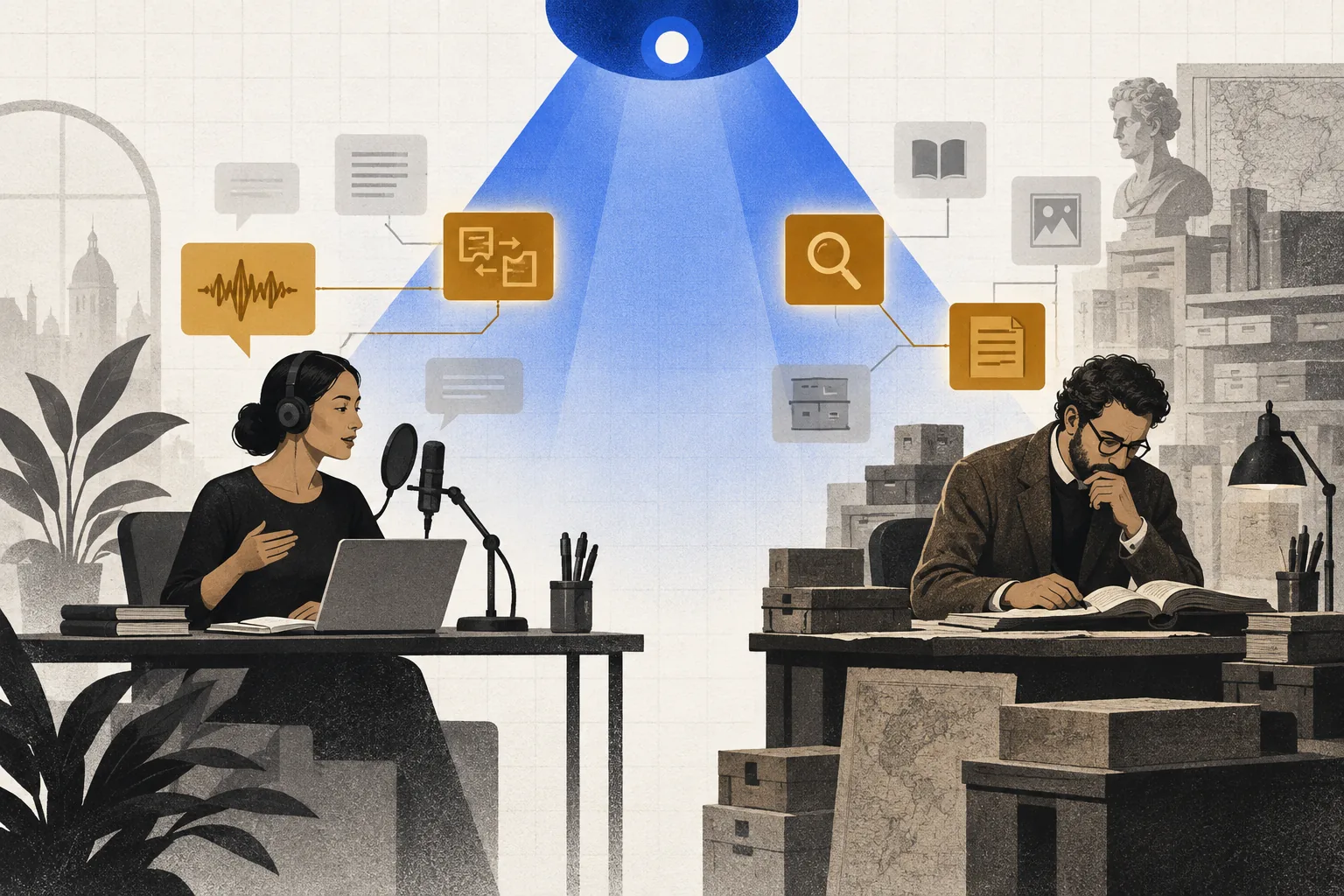
Two investors sit down to work out which jobs artificial intelligence ends, and reach for the evidence everyone reaches for: a Microsoft Research ranking with interpreters and translators at the top and historians in second place. The list is real. Their reading of it, that these are the professions most at risk, is the commonest misreading of the most-quoted study in the whole argument.
The paper scored occupations by how much their tasks overlap with what people actually asked an AI to do, drawing on roughly 200,000 anonymised Bing Copilot conversations from January to September 2024. Translators come first because translation is what people type into a chatbot, constantly, and get usable results. The authors say plainly that a high score is not a forecast that the occupation disappears.
So the ranking measures how legible a job is to a chat window, not the fate of a profession. That distinction is the whole argument rather than a pedantic one. And the conversation keeps circling the things that really decide the outcome without quite naming them: who carries the liability, who has the taste, who holds the licence and who can sell.
What the list measures, what it cannot see, and what has already been overtaken
1. The score measures overlap, not doom
Microsoft’s researchers built an AI applicability score by comparing what people asked for against the tasks that define each occupation. Interpreters and translators come first, with task coverage around 0.98 and an applicability score near 0.49; historians follow. The authors are explicit that applicability is not elimination and that many high-scoring roles are likelier to be augmented than removed. Quoting the ranking as a list of doomed professions inverts what the paper actually says, which is why almost every headline built on it has been wrong in the same direction.
2. What a chatbot log can and cannot see
The underlying data is a record of what people brought to a general-purpose assistant in 2024. It cannot see the parts of a job nobody would think to type into one: sitting with a client, being physically present, holding a licence, carrying responsibility, or knowing which question is worth asking. Nor can it see whether the answers were good enough to ship. An occupation scores high when its work is legible to a chat window, and legibility correlates with exposure without telling you whether an employer can safely stop paying for it.
3. The historian objection is better than the ranking it doubts
One speaker makes an argument the study does not. If AI displaces historians, the flow of new historical research slows, and models are left recycling what was already known at the training cut-off. Stated as a hard stop it is too strong, since research funding does not run through chatbots. Stated as a question about incentives it is sharp and general: who pays for the production of new knowledge when the reward for producing it is that a model absorbs it for nothing? That applies well beyond history.
4. The liability test, which no task-overlap measure can score
The most durable point in the conversation is that AI takes no responsibility. A model can draft a contract; it cannot sign one, and it cannot be sued. Where a profession exists partly to absorb risk on somebody else’s behalf, in law, audit, medicine or structural engineering, the drafting can be automated while the accountability cannot. That boundary is real, it is worth understanding before choosing a career or a business, and it is completely invisible to any ranking built on task similarity.
5. The photographer test: the tool moved, the judgement did not
The second durable boundary is taste. The photography argument is the right one: the same objection was raised when the camera threatened painting and again when digital threatened film, and each time the craft turned out to live in the eye rather than the equipment. Someone who cannot see what an image needs will not prompt their way to one. It cuts both ways, though. It is an argument that talent survives, not that headcount does, and those are different questions that the conversation runs together.
6. Musk against Altman is over, and it settled nothing
The conversation treats the case as newly opened and pending. It is finished. Musk sought up to $134 billion rather than the $130 billion quoted, and on 18 May 2026 an Oakland jury rejected his claims after less than two hours, finding the breach-of-charitable-trust and unjust-enrichment claims barred by a three-year statute of limitations. The court never ruled on whether the shift from non-profit to for-profit was itself improper, which is precisely the question the speakers debate. Musk said he would appeal to the Ninth Circuit.
7. The software repricing was sharper, and less settled, than described
The conversation puts the falls at 15% to 30%. The sequence was messier. Anthropic’s Claude Cowork arrived as a research preview in late January 2026, and industry plugins for legal, finance and marketing triggered the selloff: Thomson Reuters and LegalZoom each fell more than 15% in a day, with RELX and FactSet down double digits, before partly recovering. On 24 February software rebounded on Anthropic’s enterprise partnership announcements, Thomson Reuters gaining around 11%. The year-to-date damage was still real, with Adobe and Salesforce near 31% down by late April and ServiceNow nearer 40%.
8. The layoffs are not the ones in the story
The conversation reaches for Amazon, pictures warehouses of robots taking over hard physical work, and puts the figure at 10,000 to 12,000. The number is about 30,000 corporate roles: 14,000 announced in October 2025 and 16,000 more in January 2026, the largest reduction in the company’s history. They landed on middle management and corporate overhead rather than the warehouse floor, and Andy Jassy has said AI efficiency will keep corporate headcount falling. The displacement showed up in the office, not the loading bay.
9. The public-sector arithmetic is off by a definition
France has roughly 5.85 million public employees according to INSEE figures published in February 2026, split between about 2.58 million in the state service, 2.02 million in local government and 1.25 million in hospitals. Fonctionnaires in the strict sense, the tenured ones, number closer to 3.7 million; the rest work on contracts. Local government is about a third of the total rather than the quarter quoted. The claim that a million posts could go is the speaker’s own view, offered without a method, and reads as opinion rather than estimate.
Put the corrections side by side and a pattern appears. Every measure we have of AI and work is a measure of tasks, because tasks are the part that can be counted. Jobs are not bundles of tasks. They are bundles of tasks plus responsibility, presence, licence and trust, and it is the second half that decides whether an employer can stop paying. That is why the rankings keep pointing at translators and historians while the actual cuts land on middle managers, and why the software selloff hit legal-research vendors hardest: the exposed part was never the difficult part, it was the billable part.
Which makes the useful move something other than looking your job up on a list. Ask instead which half of your work you are actually paid for. If it is producing an artefact that a competent person could specify in a paragraph, the tools have arrived, and the job is to become the person writing the paragraph. If it is carrying the risk, holding the licence, seeing what is missing or persuading somebody, the tools make you faster rather than redundant. Both answers land on the same practical question: which tool for which part of the work, and how much depth each part is worth.
Questions people ask
- Which jobs are most exposed to AI according to Microsoft?
- Microsoft Research’s 2025 paper puts interpreters and translators first, with historians, writers and customer-service roles near the top. The ranking is built from roughly 200,000 anonymised Bing Copilot conversations recorded between January and September 2024. The authors stress that a high applicability score measures overlap with what people already ask AI to do, not a prediction that the occupation disappears.
- Does a high AI exposure score mean my job will be replaced?
- No, and the researchers say so directly. The score measures how much of an occupation’s work resembles what people bring to a chatbot, and many high-scoring roles are likelier to be augmented than eliminated. It cannot see the parts of a job that never reach a chat window: legal responsibility, physical presence, licensing, client trust, or knowing which question is worth asking in the first place.
- Will AI replace translators?
- Translation scores highest on exposure because it is among the most common things people ask AI to do and the output is often usable, which has already compressed rates for routine high-volume work. It has been much weaker where somebody must certify accuracy, carry liability, or exercise literary and cultural judgement. The likelier outcome is a smaller and more specialised profession rather than an absent one.
- What happened in Elon Musk's lawsuit against OpenAI?
- An Oakland jury rejected Musk’s claims on 18 May 2026 after less than two hours of deliberation, finding that his breach-of-charitable-trust and unjust-enrichment claims fell outside a three-year statute of limitations. He had sought up to $134 billion. The court did not rule on whether OpenAI’s shift from non-profit to for-profit was improper, and Musk said he would appeal to the Ninth Circuit.
- Is the SaaS business model dying because of AI?
- Per-seat pricing is under genuine pressure, since an agent doing the work of several people needs fewer seats, and 2026 repriced the sector hard: Adobe and Salesforce were down around 31% year to date by late April, ServiceNow nearer 40%. The move has not been one-way, though. Software rebounded sharply on 24 February on Anthropic’s enterprise partnership news, which suggests the market is repricing a narrative faster than it is measuring displacement.
Written 6 September 2026 from an owner-supplied French podcast conversation whose captions are automatically generated and garbled in places; the speakers are paraphrased rather than quoted, and every figure was checked against primary or first-tier sources on 6 September 2026. Verified directly: the Microsoft Research occupational study, its roughly 200,000 anonymised Bing Copilot conversations from January to September 2024, the top placement of interpreters and translators with historians close behind, the applicability and coverage scores cited, and the authors’ own statement that applicability is not elimination; the Musk v. Altman damages figure of up to $134 billion and the Oakland jury verdict of 18 May 2026 on statute-of-limitations grounds, together with Musk’s stated intention to appeal; the Claude Cowork research preview and plugin launch, the single-day falls at Thomson Reuters and LegalZoom, and the 24 February rebound on Anthropic’s enterprise partnership announcements; Amazon’s 14,000 job cuts announced in October 2025 and 16,000 in January 2026, and Andy Jassy’s comments on corporate headcount; and INSEE’s February 2026 public-employment figures for France. Corrections to the source material: the Microsoft ranking is presented in the conversation as a list of professions most at risk, which is the opposite of what its authors say it measures; the damages claim was up to $134 billion, not $130 billion, and the case was decided months before this was published rather than newly opened; the software falls were both sharper and more volatile than the 15% to 30% quoted, including a substantial rebound; Amazon’s cuts total about 30,000 and fell on corporate and middle-management roles rather than the warehouse work the conversation describes; and France has about 5.85 million public employees of whom roughly 3.7 million are fonctionnaires in the strict sense, with local government nearer a third of the total than the quarter quoted. Labelled but unconfirmed: the widely circulated claims that the February 2026 selloff erased about $285 billion in 48 hours, and that some software names fell 70% to 80% from their highs, appear in secondary commentary that could not be traced to a first-tier source, so they are excluded from the article. The speaker’s estimate that a million French public posts could be cut is his own opinion and carries no published method. Omitted as unverifiable: the conversation’s figures for the speaker’s personal investment returns, and its characterisation of individual pitch decks, neither of which can be checked. Disclosure: TaskNorth’s knowledge base recommends Claude models, and Anthropic, whose Claude Cowork launch is described above as a trigger for the software selloff, makes the models used to build this site.
Trying to work out which AI tools fit your task? Describe the outcome and get a Blueprint: the tools, the prompt, and the steps, with pricing we verified ourselves.